
Workshops
Rachel Arnold
Board Certified Behavior Therapist & Licensed Educator
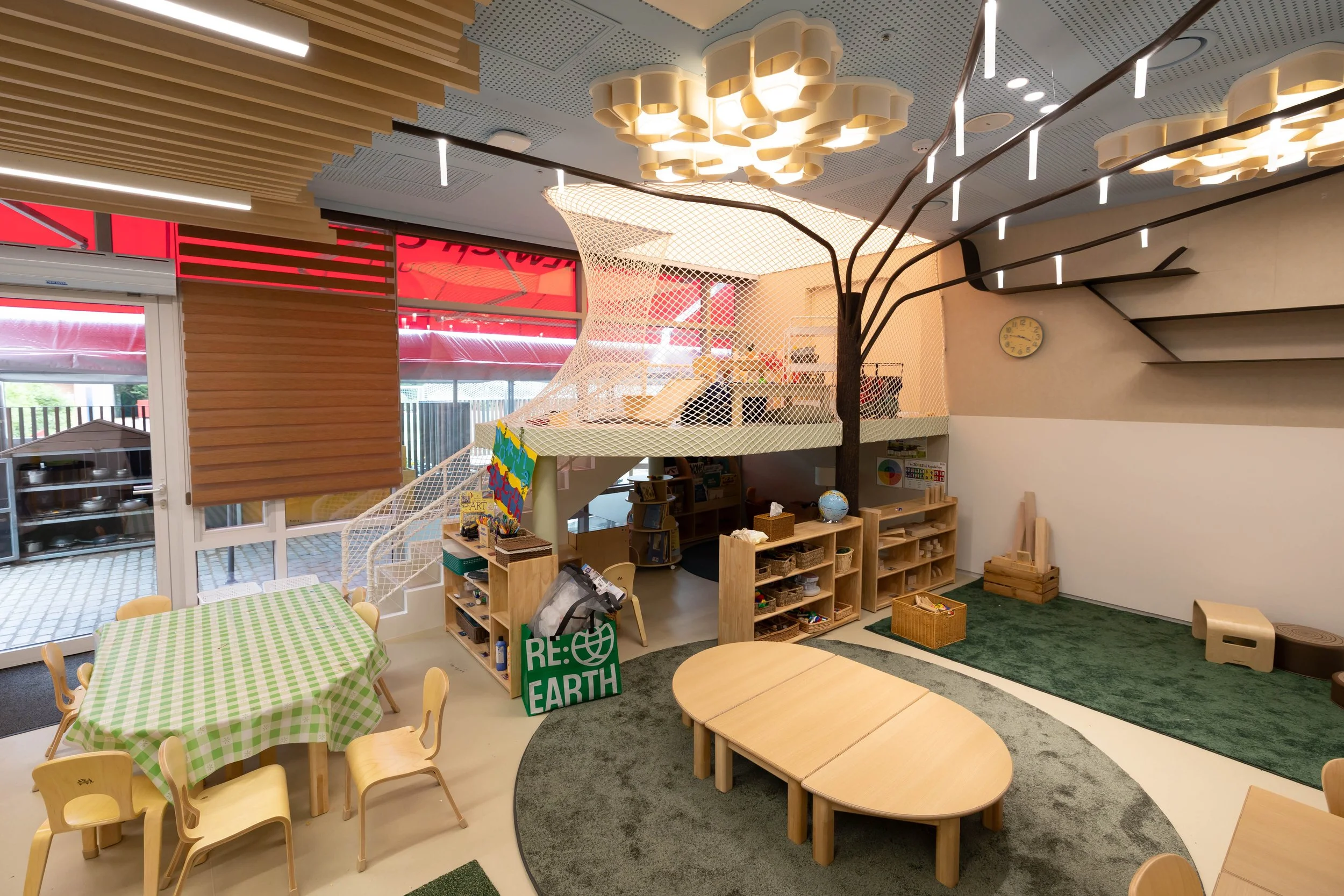
Designing Inclusive Learning Spaces: Creating Environments that Foster Joint Engagement and Play-Based Learning
Inclusive classrooms aren’t just about who is present—they’re about how every child can truly participate. In this session, we’ll explore how thoughtfully designed Early Years environments can increase learning opportunities by fostering joint engagement and play-based learning. We’ll highlight how space, materials, and routines can reduce barriers for learners with a range of abilities, expanding entry points for participation. Attendees will leave with practical strategies for arranging environments that invite collaboration, spark communication, and ensure all young learners feel valued, engaged, and included.
Lara Small
Dulwich College Seoul
Curiosity in action: Role playing that inspires thinking
Moments of awe and wonder can be transformed into meaningful learning by intentionally building on children’s questions, theories, and discoveries through rich communication and language. Through practical examples, this session examines how skilful scaffolding and purposeful dialogue extend thinking, strengthen communication and language, and deepen learning while preserving children’s natural curiosity.
Mark Kelly
Dulwich College Seoul
The Write Stuff: Using role play and drama as a lead into literacy in the Early Years.
The workshop will explore how to provide young children with learning experiences both inside and outside of the classroom that encourage a link with literacy. The workshop will provide opportunities to reflect how as a practitioner, both role play and drama can be utilized for children to write for a variety of purposes.
Andrea Carrera
Psychologist - Dwight School Seoul
The psychological role of play: what happens in the brain when children play?
This workshop explores the neuroscience behind play and its essential role in children’s emotional, social, and cognitive development. Participants will learn how play shapes neural pathways, strengthens executive functioning, supports regulation, and fosters creativity and resilience. Through practical examples and guided reflection, educators will understand how playful experiences act as a natural mechanism for learning and well-being. The session offers strategies to intentionally integrate developmentally meaningful play into daily practice.
Nina Burrows
Early Years Teacher
Small Worlds Open Possibilities - Designing Small World Play that inspires curiosity, stories and collaboration
This workshop explores how intentionally designed small world environments can open up possibilities for curiosity, storytelling, and collaborative play. Participants will consider how materials, space, and adult interaction can support rich narratives, shared thinking, and social communication, while allowing children’s ideas to lead the direction of play and learning.
Raquel Pavia
Dulwich College Seoul
Risky Play: Building Confidence, Resilience, and Independence
This workshop explores the role of risky play in supporting children’s physical development, self-regulation, and risk awareness in the early years. Participants will consider how appropriate challenge and managed risk help children build confidence, resilience, and decision-making skills within a safe and supportive environment.
Annabelle Ambrose
Dulwich College Seoul
Loose Parts for Magical Thinking
This workshop explores how loose parts can be used across the curriculum to promote imagination, curiosity, and flexible thinking. Participants will consider how open-ended materials support problem-solving, narrative development, and rich communication and language.
YoungHoon Elementary School
Maggie Goddard
Dulwich College Seoul
Learning Outdoors: Play, Schemas, and Possibility
Lisa Lilyerd
This workshop explores the power of outdoor learning as a rich context for play and schematic behaviour in the early years. Participants will consider how outdoor environments support deep engagement, physical development, problem-solving, and sustained play, while allowing children’s schemas to drive meaningful learning experiences.
This workshop explores the power of outdoor learning as a rich context for play and schematic behaviour in the early years. Participants will consider how outdoor environments support deep engagement, physical development, problem-solving, and sustained play, while allowing children’s schemas to drive meaningful learning experiences.
Gemma Stanton and Renee Lawson
Dulwich College Puxi
Capturing Magical Moments of Learning
This workshop explores how to notice, capture, and document moments of awe and wonder in the early years. Participants will consider meaningful and authentic ways to record children’s thinking, questions, and discoveries, and how thoughtful documentation can make learning visible, support reflection, and strengthen shared understanding with children, colleagues, and families.
Carolyn Hill
International School Busan
Developing a forest school programme to support play in nature
This session will explore the importance of reconnecting children with nature and the powerful role of outdoor play. Participants will gain insight into the philosophy underpinning Forest School, its impact on children’s wellbeing and development, and the practical considerations involved in establishing and sustaining a successful programme.
Louisa Ramsden and Hosana Lee
Dulwich College Seoul
Scientific Wonder: Nature as a Source of Exploration
This workshop explores how simple science provocations, natural materials, and outdoor experiences can ignite curiosity, prediction, and investigation in the early years. Participants will consider how weather, seasons, and the natural world inspire awe, imagination, and meaningful scientific thinking.
Hannah Sharp and Cindy Neo
Dulwich College Seoul
Playful Pathways to Mathematical Thinking
This workshop supports teachers in presenting mathematics as beautiful, surprising, and joyful. Through storytelling, natural patterns, and playful exploration, participants will explore ways to spark curiosity, deepen mathematical thinking, and cultivate a sense of awe in the classroom.
Genevieve Kung
Dulwich College Seoul
Big feelings, little learners
From Chaos to Calm: Supporting Big Emotions in the Early Childhood Classroom
Early childhood classrooms are full of big emotions—sometimes all at once. Grounded in Managing Emotional Mayhem by Becky A. Bailey and Conscious Discipline, this workshop helps educators shift from managing behavior to teaching self-regulation. Participants will explore how adult responses shape student behavior and learn practical strategies to support emotional safety, connection, and learning.
This workshop supports children to explore and understand their emotions through games and playful strategies, strengthening emotional regulation and personal, social and emotional development.
Kate Beith
An invitation to play outdoors: the role of provocations in outdoor learning
Drawing upon her role as a Trustee for Learning through Landscapes, Kate will lead a practical workshop on developing awe-inspiring outdoor environments. However, limited or amazing your provision is, perhaps because of space or weather, Kate will guide you in focusing on creating enchanting provocations outdoors that draw children into sustained, self-directed play.
Kate Beith
Learning stories: The voice of the child, practitioner and family
Kate will explore and share practical examples of developing Learning Stories, a narrative-based tool used to capture a child's learning through a positive, storytelling lens. From individual stories to group floor books, a Learning Story focuses on what a child can do and is often written directly to the child. A positive way of capturing children’s schemas and engaging parents. Through writing, work samples, photos, and videos. Kate will encourage participants to share their own feelings, giving the story a heart! She will also emphasise how the child’s voice is at the centre of their Learning Story, by sharing their stories with them and recording their reactions.
Greg Bottrill
Story Dreaming
Greg will be share a range of ideas that can turn up the dial of imagination, nonsense and 'story dreaming' to early childhood. Introducing the Cheese Rabbit. Binjamin, Super Codes and the Cheese and Jam song, Greg takes us on a joyous journey into the delights of the Imagined World and its magic with all their impact on language, creativity and connection.
Greg Bottrill
Play Plots
Using his concept of 'Play Plots', Greg will explore how four simple graphics can open up a world of possibilities for both children and the adults around, those that understand play and those who need more confidence. Play Plots act as a powerful way to see childhood, a lens through which to look that can empower children and adults alike to truly value their choices and creativity.
Alice Sharp
Cognition and Meta Skills for Play
This workshop explores the power of purposeful play as the foundation for learning in the early years. Participants will examine how play supports language, physical, social, emotional and cognitive development, and gain a deeper understanding of how children build knowledge through experience and exploration. We will also explore the concept of meta skills, including self-management, social intelligence and innovation, and discuss practical ways to intentionally nurture these higher order skills so children become adaptable, resilient and confident learners.
Alice Sharp
Cosmic Connections: Experimentation & Discovery for 3-6 year olds
This workshop invites participants to step into a child’s world, where everything is new and full of possibility. Through interactive demonstrations, educators will explore how early experimentation supports the development of physical skills such as balance and coordination, social skills including collaboration and empathy, and language skills such as questioning and expressive communication. Participants will also discover how simple provocations, cause and effect experiences, and open ended materials can create rich opportunities for children to explore, experiment and connect with others