
Useful Information
Seoul is a leading international hub, offering direct flight connections from many major cities across Asia, as well as convenient links to Europe, North America, and Australasia. This accessibility makes it an appealing and practical destination for visitors from the FOBISIA network and other international organisations. The city is known for its high standards of service and infrastructure, with a wide range of accommodation options available, including international hotels, boutique properties, and serviced apartments, catering to different preferences and budgets.
Dulwich College Seoul is located in the heart of the city, providing excellent connectivity to Seoul’s world-class public transport system. The campus is within easy walking distance of multiple bus routes and nearby subway stations, allowing visitors to move efficiently between the school, accommodation, and key areas of interest. Public transport in Seoul is clean, safe, affordable, and well supported in English, making it straightforward for international visitors to navigate the city independently.
To help ensure a smooth and enjoyable visit, the information below includes answers to some frequently asked questions relating to travel, transport, payments, language, and connectivity in Seoul. We have also highlighted three particularly useful mobile apps to download prior to arrival, which will support navigation, public transport planning, and everyday logistics, helping visitors feel confident and well prepared from the moment they arrive in the city.
Sched app
To help you navigate the conference easily, we will be using the Sched app. The app allows you to view the full schedule, save sessions you want to attend, and stay organized during the conference.
Please follow the steps below to download and use it.
1. Download the Sched App
The Sched app is available for both iPhone and Android devices.
For iPhone (Apple users)
Open the App Store on your phone.
Search for “Sched – Event Schedule App.”
Tap Download.
For Android
Open the Google Play Store.
Search for “Sched – Event Schedule App.”
Tap Install.
You can also download it directly from the Sched website:
https://sched.com/mobile
2. Find the Early Years Conference
Once the app is installed:
Open the Sched app.
Tap Search Events.
Type Early Years Conference.
Select the conference from the list.
You may be asked to log in or create a free Sched account. This allows you to save sessions and create your own schedule.
3. Explore the Conference Schedule
Inside the app you will be able to:
View the full conference program
See the times and locations of each session
Read information about keynotes and workshops
The schedule is organized by day and time, making it easy to plan your experience.
4. Create Your Personal Schedule
One of the most useful features of Sched is the ability to build your own agenda.
To do this:
Open a session you are interested in.
Tap the Add to My Schedule button.
This will save the session to your personal conference plan so you can easily find it later.
5. Use the App During the Conference
During the conference, the Sched app can help you:
Quickly check what session is next
Find where sessions are taking place
See your saved schedule
Stay updated with any schedule changes
We recommend checking the app at the beginning of each day to review your sessions.
6. Tips for a Smooth Experience
✔ Download the app before arriving at the conference
✔ Build your personal schedule in advance
✔ Bring your phone with the app open during sessions
The app will serve as your digital guide for the entire conference.

Frequently Asked Questions
Useful Apps






How to pay for the conference
Delegates will be sent an email with an invoice and a virtual bank account to deposit USD 150 (KRW 230,000)
Do I need a visa?
Most passports allow 30-90 day visits to South Korea visa-free. Check with your travel agent, embassy or follow the link here…
What do I do upon arrival?
Seoul has 2 airports: Incheon International Airport and Gimpo International Airport. Taxis can be easily found at the arrivals of both Seoul airports.
Click here to discover travel options.
At the airports all taxi ranks are clearly signposted. Move to the queue for Seoul. International taxis will speak multiple languages and are slightly more expensive. White taxis are standard fare and black or jumbo taxis are deluxe. Payments can be made by cash or card at the end of the journey. Have the name of your hotel in Korean to show the English-speaking taxi rank manager or driver (see your hotel website for this). Taxis are 60,000-80,000won to get to central Seoul. All taxis run on a metered system.
The airport bus is cost effective and drops at major locations throughout the city (airport.kr). Tickets can be booked in advance or in the airport arrival halls.
A fast train (the AREX) operates every 20 mins to and from Incheon’s international terminals. Tickets are roughly 10,000 won each way and it takes approximately 60 mins to travel from Incheon to Seoul Station. There is wifi and USB chargers in the carriages.
What accommodation is available?
These hotels are within a 15-20 minute taxi ride of DCSL:
JW Marriott (5 star+) Link here…
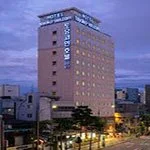
Mondrian Seoul Itaewon Hotel (5 star) - Bus Service to/from Dulwich College Seoul, Booking link here… , Booking inquiries telephone +82 (0)2-2076-2001~2 or click here…
Toyoko Inn Seoul (3 star) Link here…
Glad Yeouido (3 star) – (Bus Service to/from Dulwich College Seoul) Link here…
L7 Gangnam (4 star) Link here…
Nine Tree Premier Yongsan Seoul (4 star) Link here…

What is the weather like in March?
March in Seoul sees temperatures range from an average high of 4°C (39°F) to an average low of -7°C (19°F). Days tend to be clear, dry and cold. Travellers could expect light rain or a small amount of snow in Seoul. A warm jacket, hat and gloves are advised for visitors, especially in the crisp evenings.
What money do I need?
Korean Won is approximately 1000KWon = 0.75US$
ApplePay is increasingly widely used in Korea, and credit/debit cards are the usual form of payment even for small amounts in shops, taxis, restaurants and hotels. Korean cash is readily accepted though.
There is an ATM situated outside Dulwich College Seoul.
How do I get around?
Fast, safe and efficient public transport is standard around the city of Seoul. The subway, buses and taxis are easily accessible on English language apps. All proposed hotels are within 15 minutes of the campus.
Dulwich College is 50 mins by taxi/60 mins by deluxe bus from the Incheon International Airport and 25 mins by taxi/30mins by deluxe bus to Gimpo Airport (northern Asia routes).
Naver Map
The most reliable navigation app in Korea. It provides accurate walking, driving, and public transport directions, real-time traffic updates, and English-language support. Google Maps has limited functionality in Korea, so this is essential.
Web: https://map.naver.comKakaoMap
Another excellent mapping app widely used by locals. It’s particularly strong for finding nearby restaurants, cafés, landmarks, and subway exits, and is a good backup to Naver Map.
Web: https://map.kakao.comKakaoTalk
Korea’s dominant messaging app. Many hotels, schools, tour providers, and even restaurants use KakaoTalk for communication, making it very useful for local contact and coordination.
Web: https://www.kakaocorp.com/page/service/service/KakaoTalkPapago
One of the best translation apps for Korean–English. It handles menus, signs, images, and spoken translation very well and is generally more accurate for Korean than Google Translate.
Web: https://papago.naver.comKorea Subway
A simple, clear app for navigating Seoul’s subway system. It shows routes, transfer stations, journey times, and fares, and is very helpful when planning daily travel around the city.
Web: https://www.metrocounter.com